The Lost Art of Slow Hands: How Ancient Punjabi Prep Methods Protect the Nutrients Your Blender Destroys
There's a moment in a lot of South Asian households — maybe you've witnessed it — where someone's grandmother waves off the food processor like it personally offended her. She reaches instead for the sil batta, the heavy stone grinding slab that's probably older than the house itself, and gets to work. It looks inefficient. It looks like extra effort. It is, in every measurable way, producing better food.
This isn't sentiment talking. The growing body of nutritional research into food processing methods is quietly confirming what Punjabi culinary tradition has practiced for centuries: how you prepare food matters just as much as what food you choose.
Why Friction and Pressure Beat Speed Every Time
When you run spices or grains through a high-speed blender, two things happen almost immediately. First, the blade friction generates heat — sometimes enough to reach temperatures that degrade volatile aromatic compounds and heat-sensitive antioxidants. Second, the speed of processing doesn't allow cell walls to rupture in the same gradual, thorough way that slow grinding does.
Stone grinding, by contrast, applies consistent pressure across a wide surface area at low speed. This mechanical action breaks open plant cell walls more completely, releasing essential oils and phytonutrients that would otherwise remain locked inside. Research published in food chemistry journals has noted that cold-ground spices retain significantly higher concentrations of volatile compounds — the very molecules responsible for both fragrance and therapeutic effect — compared to those processed by high-heat methods.
In traditional Punjabi cooking, the sil batta wasn't just used for spice pastes. Fresh chutneys, wet masalas, and even certain grain preparations were all processed this way. The result was a texture and flavor density that food scientists now describe as greater "matrix disruption" — essentially, more of the good stuff gets out.
Fermentation: The Slow Clock That Modern Kitchens Keep Skipping
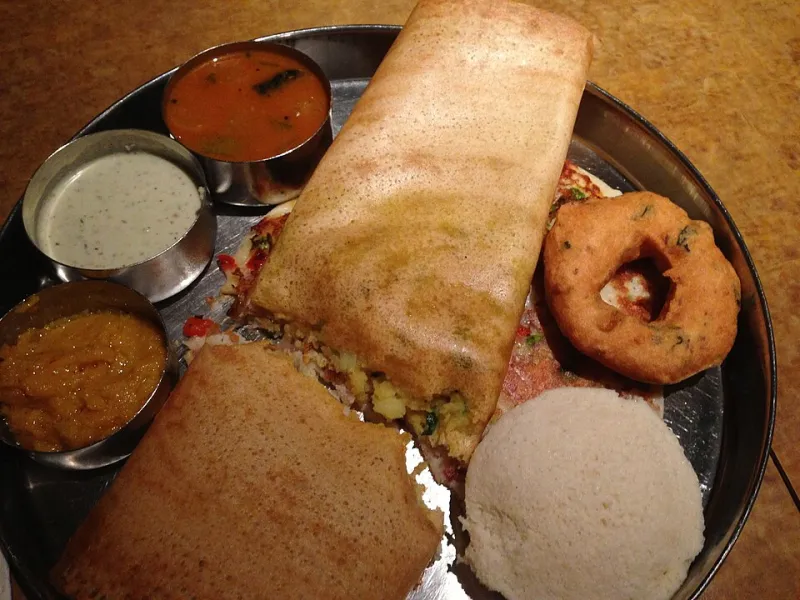
If stone grinding is the most visible lost technique, slow fermentation might be the most consequential. Traditional Punjabi breads like khamiri roti relied on naturally fermented dough that sat for hours, sometimes overnight, before cooking. Lassi — the yogurt-based drink that's become mildly trendy in American wellness circles — was traditionally a product of prolonged, ambient-temperature culturing that encouraged a diverse microbial population far richer than what you get from a two-hour store-bought shortcut.
The difference isn't trivial. Extended fermentation breaks down phytic acid, an antinutrient present in grains and legumes that binds to minerals like iron, zinc, and magnesium and prevents their absorption. A dough fermented for eight to twelve hours will deliver meaningfully more bioavailable minerals than the same dough rushed through a quick-rise process. For a population where iron deficiency is the most common nutritional deficiency in the US, this isn't a small thing.
Slow fermentation also produces a broader spectrum of short-chain fatty acids and beneficial bacterial strains, which support gut lining integrity and immune function. The gut-health supplement industry is worth billions of dollars in America right now. Traditional Punjabi kitchens were delivering these benefits through breakfast.
The Mortar's Secret: Bruising vs. Cutting
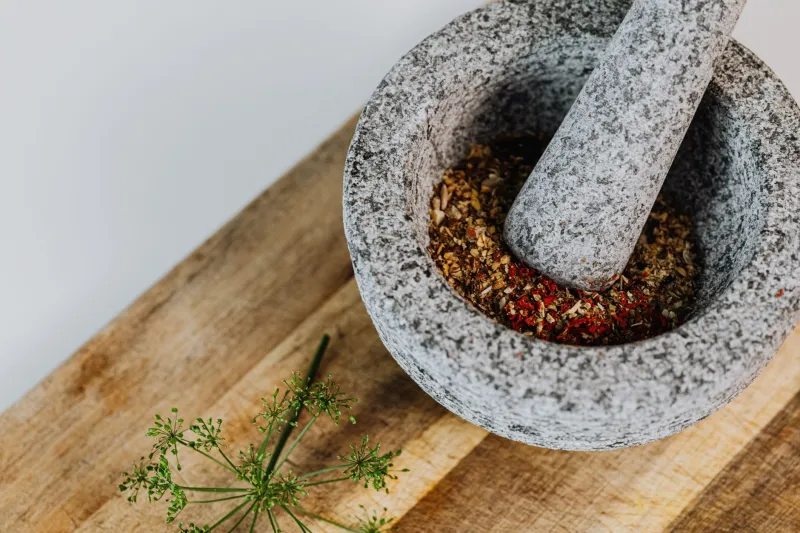
There's a reason professional chefs reach for a mortar and pestle when they want maximum flavor from whole spices, even when a spice grinder is sitting right there. Pounding bruises plant tissue rather than slicing through it cleanly. This distinction matters enormously at the molecular level.
When you bruise a spice like cumin or cardamom, you trigger enzymatic reactions that begin converting precursor compounds into their fully active aromatic forms. It's similar to the way crushing garlic activates allicin — the compound responsible for both its flavor and its well-documented antimicrobial properties — far more effectively than chopping does. Punjabi cooks working with a hawan dasta (the traditional brass or stone mortar) were, without the vocabulary of food chemistry, optimizing for exactly this kind of activation.
Slicing or high-speed processing cuts through cell walls so quickly that these enzymatic reactions don't have time to complete. You get the flavor, but you get less of it, and you get fewer of the bioactive compounds that make these spices worth eating in the first place.
Bringing It Home: Practical Adaptations for the American Kitchen
None of this means you need to replace your KitchenAid with a river stone. The goal is to understand why these methods work so you can make smarter choices about when to use them.
For spice pastes and chutneys: A molcajete (the Mexican stone mortar widely available at US kitchen stores) is a functional stand-in for the sil batta and produces genuinely superior results for small-batch grinding. Reserve it for fresh herb chutneys and wet masalas where aromatics matter most.
For fermentation: Simply extend your timelines. If you're making yogurt, let it culture for ten to twelve hours at room temperature rather than rushing it in a warm oven. If you're working with chickpea flour batters or whole wheat doughs, a slow overnight ferment in the refrigerator will reduce antinutrients and deepen flavor simultaneously.
For whole spices: Toast them in a dry pan before grinding, then use a mortar and pestle for small quantities rather than defaulting to the blender. The extra five minutes is not a wellness ritual — it's a chemistry decision.
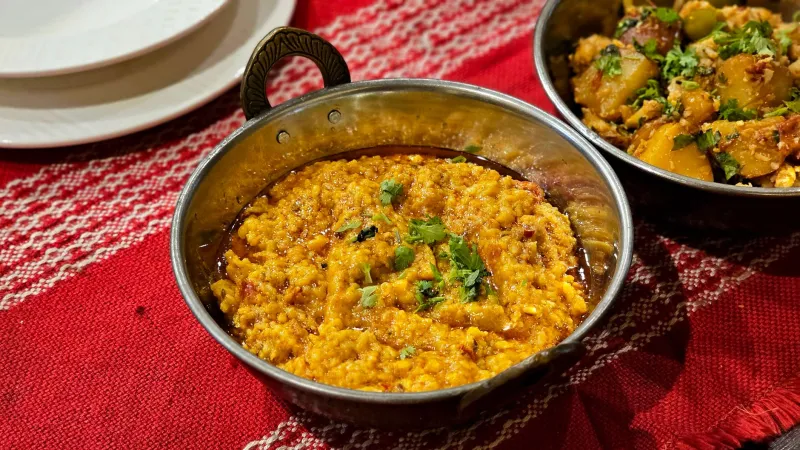
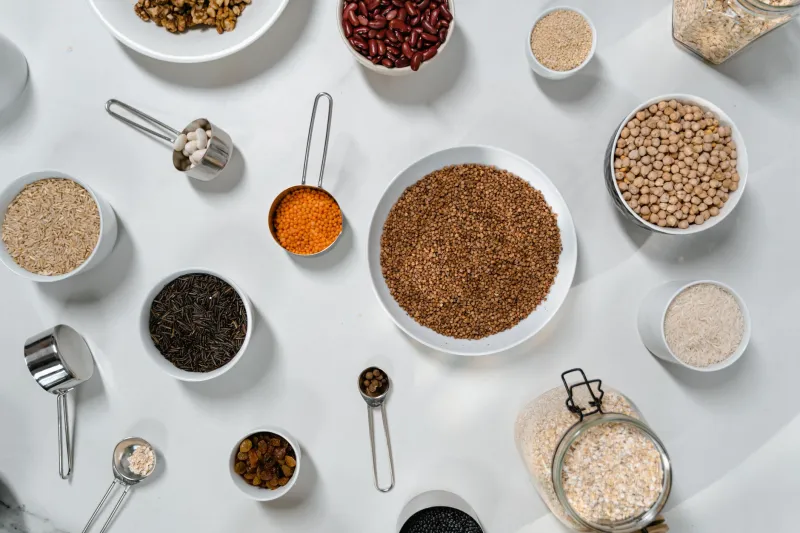
For legumes: Traditional Punjabi preparation always included extended soaking (eight to twelve hours minimum) followed by slow cooking. This two-stage process dramatically reduces lectins and phytic acid. A pressure cooker can handle the cooking phase efficiently without sacrificing the benefits of that initial soak.
What We Actually Lost When We Sped Everything Up
The shift toward convenience appliances in American kitchens happened fast — within a generation or two — and it brought genuine benefits. Accessibility, time savings, and consistency are real. But the trade-off was largely invisible because we were optimizing for outputs we could measure (time, cost, ease) while losing outputs we couldn't easily see (nutrient retention, enzymatic activity, microbial diversity).
Punjabi culinary tradition didn't develop its methods arbitrarily. They evolved over centuries of observing what made people feel well, what kept communities strong through agricultural seasons, and what made food taste worth eating. That's a multi-generational research project with a pretty compelling sample size.
You don't have to choose between a functional modern kitchen and the wisdom embedded in these techniques. You just have to know which tool to reach for, and when slowing down is actually the more sophisticated choice.