I Ate Like a Punjabi Farmer for 30 Days. Here's What Actually Changed.
Let me be honest about where I started: I was not a believer.
I'd read enough wellness content to be thoroughly suspicious of any experiment framed as a dramatic personal transformation. "I tried X for 30 days and my life changed" is practically its own genre at this point, and it's usually selling something. So when I decided to spend a month eating according to traditional Punjabi agricultural patterns — the seasonal rhythms, the meal timing, the specific ingredient ratios that farming communities in Punjab have used for generations — I went in with my skepticism fully intact.
I came out the other side with a more complicated relationship to that skepticism.
What "Eating Like a Punjabi Farmer" Actually Means
Before I explain what changed, I should explain what I actually did, because this wasn't about eating exclusively Punjabi food for a month. It was about adopting the structure and principles that traditional Punjabi agricultural eating is built around.
The framework, as best I could reconstruct it through research and conversations with people who grew up in Punjabi farming households, looks roughly like this:
Meal timing aligned with labor cycles. The heaviest meal of the day is midday, not evening. Breakfast is substantial but simple — often a grain-based preparation with fat and some form of cultured dairy. Dinner is light and early, ideally before sunset or shortly after.
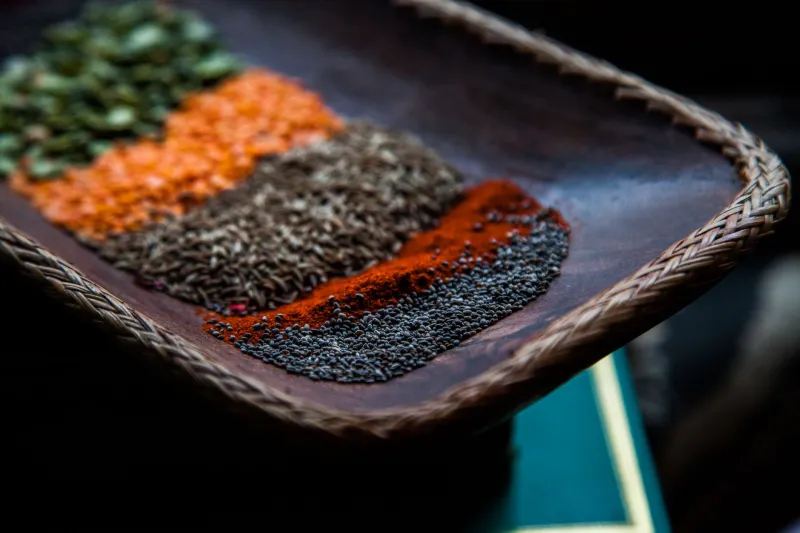
Seasonal ingredient rotation. Winter months center on mustard greens, root vegetables, corn flour, and warming spices. Spring and summer shift toward lighter lentil preparations, fresh herbs, and cooling dairy like lassi. This isn't arbitrary — it tracks closely with what the land in Punjab actually produces across its agricultural calendar.
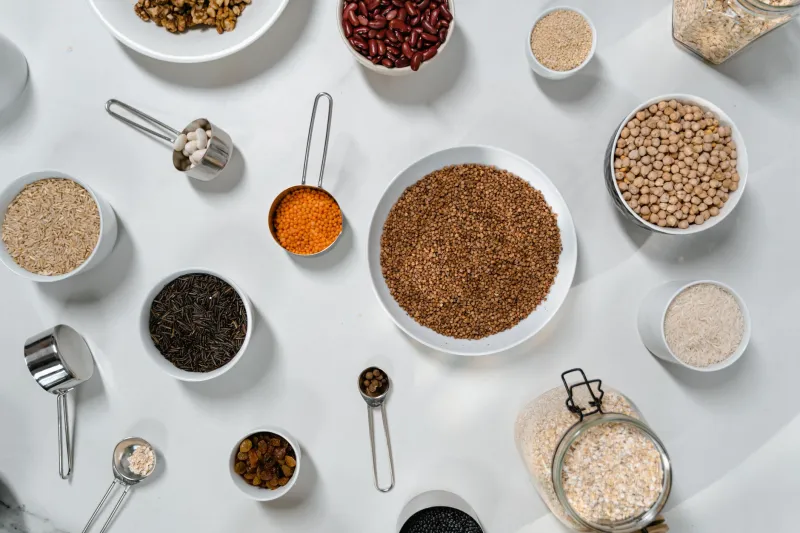
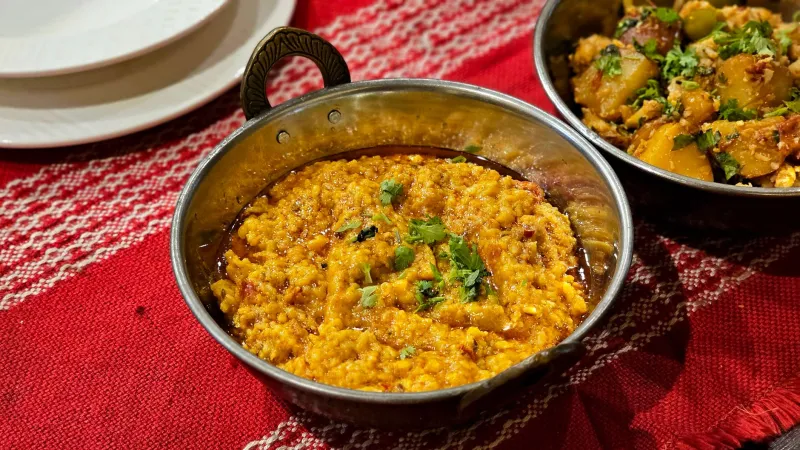
Legumes as a daily anchor. Dal — lentils or other pulses in some form — appears at almost every main meal. Not as a side dish, but as a central protein and fiber source.
Fat is not the enemy. Ghee appears regularly, used as a finishing element and cooking medium. Whole milk dairy, butter, and mustard oil are standard.
Minimal processing, maximum prep time. Grains soaked overnight. Yogurt cultured at room temperature. Spices ground fresh when possible.
I adapted this framework to a life in the US that includes a full-time job and a kitchen without a sil batta. I wasn't going for historical accuracy — I was going for functional alignment with the underlying principles.
Week One: The Adjustment Is Real
The first thing that hit me was the midday meal shift. Moving my largest, most calorie-dense meal to lunch instead of dinner sounds simple in theory. In practice, it required restructuring my entire workday.
I also underestimated how satisfying a grain-forward breakfast would be. I'd been a yogurt-and-coffee person for years. Switching to something like makki di roti with a small amount of ghee and a cup of spiced chai felt almost aggressively wholesome. By 10 AM on day three, I noticed I wasn't thinking about food at all — which, for someone who typically starts eyeing the snack drawer by 9:30, was notable.
Digestion-wise, week one was uncomfortable. Adding a daily dal preparation alongside significantly more whole grains and legumes than I was used to produced the predictable adjustment period. I'll spare the details, but I'll note that this is documented: rapidly increasing fiber intake from whole food sources causes temporary disruption before the gut microbiome adapts. I knew this going in. Knowing it didn't make it more fun.
Week Two: Something Shifts
By the second week, the digestive turbulence had settled, and I started noticing something I hadn't expected: my energy curve across the day had changed shape.
I'd lived with a fairly predictable 2–3 PM energy crash for as long as I could remember. It was so consistent I'd built my schedule around it — nothing requiring serious concentration after lunch. In week two, that crash was significantly blunted. Not gone, but reduced from a wall to a gentle slope.
I want to be careful here about attribution. There are a lot of variables in a month-long dietary change, and I'm not a controlled study. But the timing aligned with two specific shifts: the move to a substantial midday meal (which meant I wasn't eating a large dinner and then sleeping on a full digestive load), and the daily lentil consumption, which was stabilizing my blood sugar in ways I could feel.
I also started sleeping better. Again — correlation, not necessarily causation. But the pattern was consistent enough to notice.
Week Three: The Part I Didn't Expect
Somewhere around day eighteen, I stopped thinking of this as an experiment and started thinking of it as just how I was eating. That's a subtle shift, but it mattered.
The food had become genuinely satisfying in a way I hadn't anticipated. This is partly about flavor — when you're cooking with freshly toasted and ground spices, slow-fermented doughs, and high-quality ghee, the food is just good. But it was also something harder to quantify: a sense of coherence between what I was eating and what my body seemed to want.
I started paying attention to the seasonal logic more deliberately. I was eating in late autumn, which in the Punjabi agricultural calendar means mustard greens, root vegetables, and warming spice blends. These happened to be exactly the foods that felt most appealing as the weather in my city turned cold. Traditional food systems didn't develop their seasonal patterns arbitrarily — they emerged from observation of what the body craves as its environment changes.
Modern nutrition science is circling back to this idea through the lens of the gut microbiome, which research suggests actually shifts composition across seasons in response to available foods. Eating seasonally isn't just about freshness and sustainability — it may be about microbial diversity in ways we're only beginning to understand.
Week Four and the Numbers
I did some basic tracking across the month — not obsessively, but enough to have data to look at. A few things stood out:
My overall calorie intake dropped slightly without any deliberate restriction, largely because the satiety from high-fiber, high-protein legume-centered meals meant I was less likely to snack between meals or eat out of boredom in the evenings.
I lost a small amount of weight — about four pounds — which I attribute primarily to the meal timing shift and the reduction in late-evening eating rather than any dramatic dietary change.
More meaningfully, a mid-experiment blood sugar check (I have borderline readings that I monitor periodically) showed a modest improvement that my doctor noted without me prompting the conversation.
What I'm Actually Taking Away
I'm not going to tell you that thirty days of eating like a Punjabi farmer will transform your health. That's not what this was, and it's not what I experienced. What I experienced was something more interesting: a practical demonstration that a food system designed around the rhythms of physical labor, seasonal agriculture, and daily cooking from whole ingredients produces outcomes that align remarkably well with what modern nutritional science recommends — often without the supplements, the tracking apps, or the expensive specialty products.
The Punjabi agricultural diet isn't a protocol. It's a coherent relationship between people, land, seasons, and food that evolved over centuries of lived experience. Adopting pieces of it in a contemporary American kitchen requires some translation. But the translation is worth attempting.
The ghee is staying. The morning dal is staying. And I'm genuinely looking forward to the mustard greens.