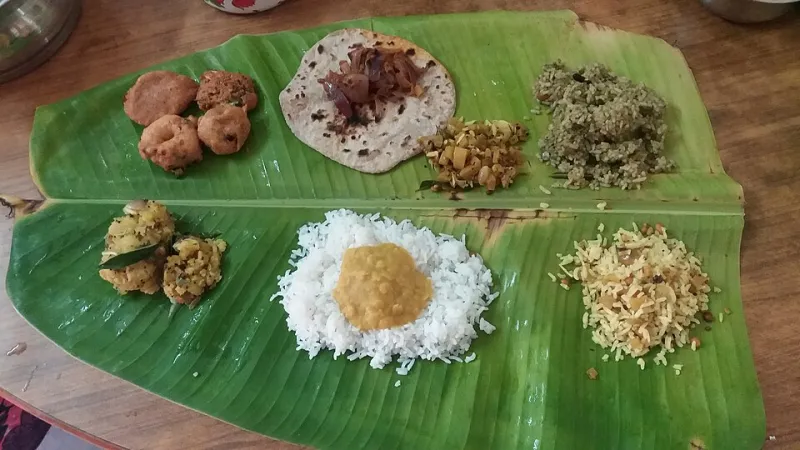
Move Over, Quinoa: The Ancient Punjabi Grain Small Farmers Refused to Let Die

Photo by Photo by Ali Hamza Tullah on Unsplash on Unsplash
For the past two decades, Americans looking to upgrade their grain game have been told the same story: go south. Go to the Andes for quinoa, to Ethiopia for teff, to Central America for chia. The superfoods, apparently, all lived somewhere else.
But in the rural districts of Punjab — in fields that global agriculture largely forgot — a grain called kodo millet was quietly doing everything quinoa does, and in several measurable ways, doing it better. It didn't get a TED Talk. It didn't show up in a Whole Foods endcap display. It almost vanished entirely. And the only reason it didn't is because a generation of Punjabi farmers decided it was worth saving.
This is the story of that grain, those farmers, and why kodo millet might be the most important ingredient you've never heard of.
What Exactly Is Kodo Millet?
Kodo millet (Paspalum scrobiculatum) is one of the oldest cultivated grains in South Asia, with archaeological evidence of its use dating back over three thousand years. In Punjab and across northern India, it was historically grown as a rain-fed crop — meaning it required no irrigation, thrived on monsoon rainfall alone, and produced reliable yields even in poor soil conditions.
For subsistence farmers, this made it invaluable. For industrial agriculture, it made it irrelevant. Kodo millet can't be grown at the scale or speed that commercial grain operations demand. It doesn't respond well to synthetic fertilizers, which actually tend to reduce its nutritional density. And it requires traditional processing knowledge — specifically, the right dehulling technique — that modern milling equipment doesn't accommodate easily.
So when the Green Revolution swept through Punjab in the 1960s and 70s, flooding the region with high-yield wheat and rice varieties, kodo millet got pushed to the margins. Most farmers abandoned it. A few didn't.
The Nutritional Case: Why This Grain Outperforms the Trendy Ones
Let's get specific, because the numbers here are genuinely striking.
Kodo millet contains approximately 8.3 grams of protein per 100 grams — comparable to quinoa's 8 grams. But the real differentiator is the amino acid profile. Kodo millet is notably high in leucine, the branched-chain amino acid most directly associated with muscle protein synthesis, and contains meaningful levels of methionine, which quinoa is actually relatively low in.
On the mineral front, kodo millet delivers: iron at levels that rival red meat on a per-calorie basis, calcium that exceeds most other grains, and phosphorus levels that support bone density and cellular energy production. It also contains significant amounts of polyphenols — specifically tannins and phenolic acids that function as antioxidants and have been studied for their anti-inflammatory effects.
The glycemic impact is where kodo millet really separates itself from the competition. Its glycemic index is estimated between 45 and 55, depending on preparation method — substantially lower than quinoa (53–53 range) and significantly below white rice (70+) or whole wheat bread (69–72). For the millions of Americans managing blood sugar, pre-diabetes, or metabolic syndrome, that difference is clinically meaningful.
"What we're seeing with millets in general, and kodo millet specifically, is a nutrient density per calorie that most modern staple grains simply can't match," says food scientist and grain researcher Dr. Kavita Rao, who has published work on traditional South Asian grain varieties. "The tragedy is that these crops were sidelined by agricultural policy, not by nutritional merit."
The Farmers Who Kept It Alive
In the Hoshiarpur and Gurdaspur districts of Punjab, a small network of organic farmers — many of them working land that has been in their families for five or six generations — never fully gave up on kodo millet. Not because it was profitable. For most of the last 40 years, it wasn't. They kept growing it because they kept eating it.
"My grandfather grew kodo. My father grew a little less. I grew even less for a long time," says Balwinder Singh, a third-generation farmer who now cultivates about four acres of kodo millet alongside his main wheat crop. "But my mother kept cooking with whatever we had. She said it was the grain that kept the family strong. When my children started having digestive problems with wheat, I started paying more attention to what she was telling me."
Balwinder's experience mirrors what researchers studying traditional crop preservation have documented across the region: it was often the women in farming households — the ones actually cooking the grain daily — who maintained the seed stocks, the processing knowledge, and the culinary traditions that kept these varieties alive.
Over the past decade, a growing network of small organic farms in Punjab has begun deliberately expanding kodo millet production in response to both domestic demand and interest from international buyers. Organizations like the Millet Network of India have worked to connect these farmers with markets, and a handful of specialty food importers in the US have started bringing kodo millet to American consumers — though it remains difficult to find outside of specialty Indian grocery stores and online retailers.
Why the West Missed It
The story of kodo millet's near-disappearance from global food culture is partly about agriculture policy and partly about marketing. When Western health food markets began their superfood obsession in the early 2000s, the grains that got elevated were the ones with compelling origin stories, photogenic packaging, and supply chains already in place to serve American retail.
Quinoa had the Inca narrative. Teff had the Ethiopian distance runner story. Kodo millet had... small farms in Punjab that nobody had thought to photograph.
"There was never a branding moment for kodo millet," says food writer and South Asian culinary historian Meera Pillai, who has written extensively about the politics of superfood designation. "The crops that became global superfoods weren't necessarily the most nutritious. They were the ones that got found by the right food journalist at the right trade show. Kodo millet just didn't have that luck."
That's changing slowly. As interest in ancient grains expands beyond the Andean and African varieties that dominated the first wave, researchers and food entrepreneurs are turning their attention to South Asian grain diversity — and finding a treasure chest that was hiding in plain sight.
How to Find and Cook With Kodo Millet
Kodo millet is available in the US through several channels, though it takes a little more effort to source than quinoa. Your best starting points:
- Indian and South Asian grocery stores often carry it under the name "kodo" or "kodra" — ask specifically; it may be shelved with other millets rather than in the grain aisle.
- Online specialty retailers focusing on Indian organic foods increasingly stock it, often in 2- or 5-pound bags.
- Organic food co-ops in cities with large South Asian communities sometimes carry it.
Once you have it, cooking is straightforward. The grain cooks similarly to rice: a 1:2.5 ratio of kodo to water, simmered for about 20 minutes. It has a mild, slightly earthy flavor that absorbs spices beautifully — which is exactly how Punjabi cooks have been using it for centuries.
Try it as a base for a spiced khichdi (replacing or mixing with rice), cook it into a warm breakfast porridge with ghee and jaggery, or use it as a rice substitute under dal or curry. It holds up well to bold flavors and actually improves in texture when cooked with a small amount of fat.
The grain that Punjabi farmers refused to abandon isn't a trend. It's a foundation — one that was always there, waiting for the rest of us to catch up.